
Steel import rules to drive UK manufacturing overseas
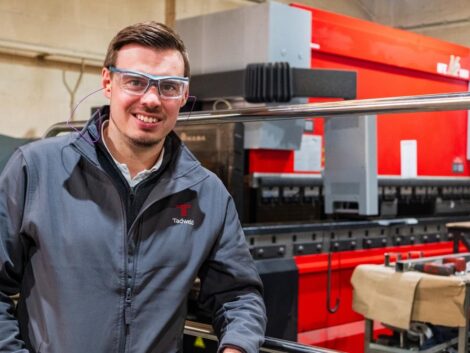
Yorkshire-based steelwork contractor Tadweld has warned that the government’s steel safeguard policy is making it increasingly expensive to manufacture in Britain, leaving UK fabricators paying more for essential steel products while overseas competitors continue supplying finished steelwork into the UK at a competitive advantage.
The warning follows changes to the UK’s steel safeguard measures, which came into force on 1 July. The reforms reduce tariff-free import quotas for a number of steel product categories and increase tariffs on imports above those thresholds from 25% to 50%. Ministers have said the measures are designed to protect the UK’s steel industry from global overcapacity, strengthen domestic production and improve Britain’s long-term industrial resilience.
However, Tadweld says the policy fails to reflect the reality of the UK’s manufacturing supply chain. While British steelmakers produce high-quality steel, many of the structural sections, specialist grades and components required by steel fabricators are either unavailable, not manufactured domestically in sufficient quantities, or are simply too expensive. As a result, UK manufacturers have little choice but to import key steel products to complete projects.
The company says the issue is not the need to protect British steel production, but the unintended impact on the businesses that rely on steel. As the cost of importing steel products increases, UK manufacturers face higher input costs than competitors elsewhere in Europe, who can often buy the same materials more cheaply, manufacture finished products overseas and then export them into Britain.
Chris Houston, Managing Director at Tadweld, said: “Whilst we support the government’s ambition to support the British steel industry, it’s essential business like ours, the consumers of steel, are considered as part of that eco-system.”
“Take something as simple as a metal pencil case. A UK manufacturer may have to import the sheet steel because it’s not readily available, or notably more expensive from UK producers. Under the new rules, that steel could cost significantly more to bring into Britain.
“Meanwhile, a manufacturer elsewhere in Europe can buy exactly the same steel without those additional costs, make the pencil case there and then sell the finished product into the UK. The result is that it can become cheaper to buy a product made overseas than to manufacture it here, even though the raw material is exactly the same.”
According to the company, this creates an uneven playing field where UK fabricators face rising material costs while overseas manufacturers can continue competing for the same contracts by importing completed products into Britain.
The concerns follow recent Tadweld research which found the UK is on course to become the most expensive market in Europe for structural steel by 2027.
Based on market forecasts, UK hot-rolled structural steel sections could rise from around €780 per tonne to more than €1,000 per tonne once the safeguard measures and forthcoming Carbon Border Adjustment Mechanism (CBAM) are fully reflected in prices.
Houston added: “The government has spoken about strengthening Britain’s industrial resilience, but resilience isn’t just about protecting steel production. It’s about making sure British manufacturers can compete.”
“If UK businesses are paying significantly more for the steel products than competitors elsewhere in Europe, the commercial reality is simple. More fabrication work, investment and skilled jobs will continue moving overseas because that’s where the economics increasingly stack up.”
“We should be encouraging companies to buy steel, fabricate it and create jobs here in Britain. Instead, we’re creating a system where it becomes more commercially attractive to carry out that work elsewhere before importing the finished product back into the UK. That isn’t strengthening British manufacturing, or British steel production, unfortunately it’s weakening it.”
“I sympathise with the UK steel manufacturers, they are contending with the most expensive energy prices in Europe, and unsurprisingly making steel uses a lot of energy. However, protecting that industry at the expense of another surely isn’t the answer”
Tadweld is calling on the government to work with steel producers, fabricators and manufacturers to ensure future trade policy supports the competitiveness of the entire UK steel supply chain, rather than one part of it, and prevents policies designed to protect British industry from inadvertently pushing fabrication work overseas.


