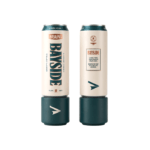
Orora sees growth in beverage can business

Orora’s beverage can business grew volumes 6.3% in the year to 30 June 2026, with revenue up 13.3% to A$880m, supported by continued demand and an ongoing shift towards aluminium cans.
The group reported Cans EBITDA of A$131.2m, up 10.5%, and EBIT of A$111.4m, up 7.3%. Excluding a A$5m corporate cost allocation carried in the first half, EBIT rose 12.2% and underlying EBITDA was 14.7% higher.
Some of the revenue growth reflected aluminium pass-through pricing. Stripping that out, sales still rose 10.5%. Margins slipped 70 basis points to 12.7%, held back by higher inter-state transport costs and a 32.4% increase in depreciation as recent capacity projects came onto the books.
The volume growth was enabled by two investments. A second line at Revesby has added 10% to Orora’s network capacity and is supporting what the company described as elevated Queensland customer demand for multi-size cans, driven by new filling investments in the state.
The larger project, a 375ml Classic Cans line at Rocklea, remains on track for commissioning by the end of the first quarter of FY27. It will add around 13% of network capacity over time, taking 12 months or more from commissioning to fill, and completes a total investment of roughly A$140m.
Orora said its target of more than A$50m in EBIT from recent Cans growth investments by FY30 remains on track.
Growth was strongest outside alcohol, particularly in energy drinks, carbonated soft drinks and alternative soft drinks, with beer also performing well. That last point was reinforced elsewhere in the results: Orora’s Gawler glass plant in South Australia saw volumes fall 2.1%, and the company flagged a continuing substrate shift to cans for beer as one of the pressures on that site into FY27.
Managing director and chief executive Brian Lowe said favourable market dynamics in cans, including the consumer preference shift to aluminium and growth in new beverage categories, had supported the volume and earnings growth. He added that the group’s major capital expenditure cycle is now complete, with long-term investments shifting from capital spend to cash generation.
Cans EBIT is expected to be higher in FY27, with volumes growing in line with long-term rates of around 4% to 6%. Stronger EBITDA will be partly offset by higher depreciation and amortisation once Rocklea is running.FY27 also marks a return to five and six-day operations after five years of continuous 24/7 production across all lines and sites.
On sustainability, Orora achieved 77% total recycled content in cans, down slightly from 78% in FY25 against a target of 80% by FY30. The company attributed the dip primarily to the ongoing Middle East conflict.
The cans result sat against a heavy statutory loss at group level. Orora posted a statutory net loss after tax of A$616.6m, after a A$742.8m non-cash impairment of its glass business, comprising Saverglass goodwill and other assets.
Saverglass grew volumes 5.9% but saw EBIT fall 20.6% in euro terms to €62.8m, as within-category mix shifts pulled down average selling prices. US tariffs, the Middle East conflict and cost-of-living pressures were all cited. The company’s RAK facility in the UAE has been in “closed loop” mode since April and is due to restart on a restricted-volume basis from October, routed via alternate shipping ports in Oman.
Group revenue was A$2,225.9m, up 6.5%, with group EBITDA broadly flat at A$420.3m. Underlying NPAT fell 5.9% to A$142.2m. A final dividend of 4.0 cents per share takes the FY26 total to 9.0cps, and the paused on-market buyback will resume following the results.